
Why Isn’t Gold Rising? Where Is Global Capital Moving?
Geopolitical crises usually push investors toward gold and government bonds. Yet during the latest wave of global tensions, markets are reacting differently. Gold prices have remained largely unchanged over the past week, while long-term government bond yields have continued to climb.
The U.S. 10-year Treasury yield has hovered to 4.24% level, even as shorter-term yields softened. At the same time, the U.S. Dollar Index (DXY) has strengthened as investors sought liquidity. Market volatility indicators such as the CBOE Volatility Index (VIX) have also moved higher, reflecting rising risk perception across global markets.
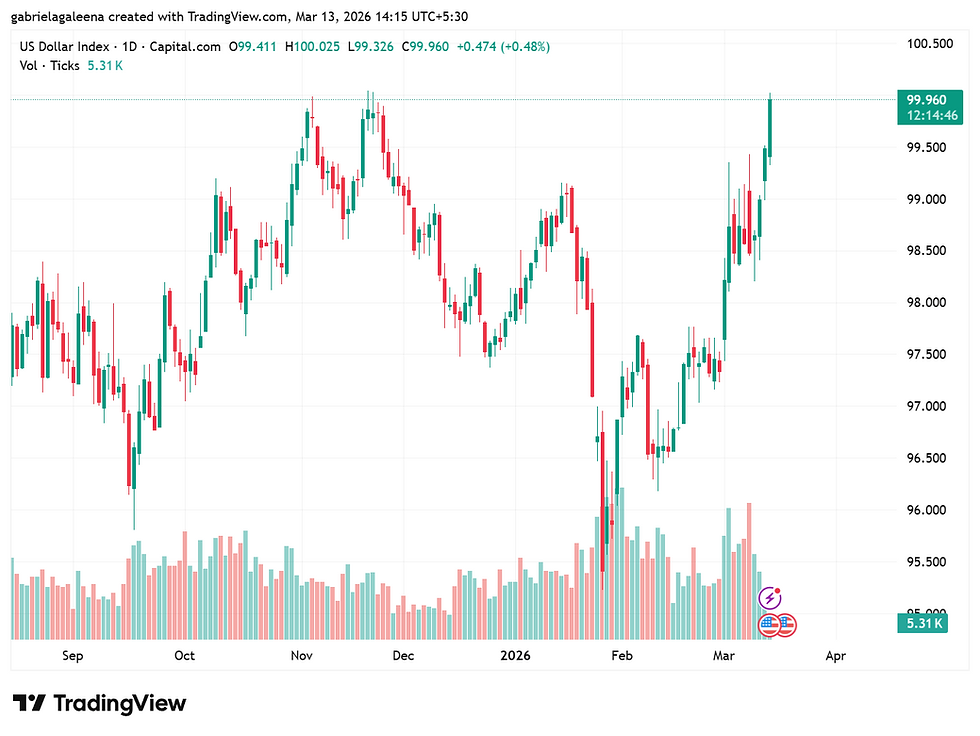
This unusual combination suggests that investors may be hedging inflation risk rather than simply seeking traditional safe-haven assets.
Defensive Assets in Past Crises
Historically, geopolitical and financial shocks produced predictable shifts in capital flows.
During the 2008 Global Financial Crisis, the yield on the 10-year U.S. Treasury fell from roughly 4% in mid-2008 to 2.25% by the end of the year as investors rushed into government bonds.
Similarly, during the COVID-19 pandemic market crash, the 10-year Treasury yield briefly dropped to 0.52%, reflecting extreme demand for safe assets.
Gold also surged during earlier crises. Between 2008 and 2011, gold prices climbed from around $900 per ounce to over $1,500, driven by investor demand for protection against financial instability and currency debasement.
These episodes reinforced the idea that gold, sovereign bonds, and the U.S. dollar act as the primary defensive assets during global crises.
Why Markets Are Acting Differently
The current geopolitical environment introduces a powerful new factor: energy-driven inflation.
Many ongoing tensions involve regions central to global energy supply chains. When geopolitical risks threaten production or shipping routes, oil prices respond quickly. Recently, crude oil prices moved above $100 per barrel, reflecting concerns about potential supply disruptions.
Higher energy prices ripple through the global economy by increasing transportation costs, manufacturing expenses, and electricity prices. As inflation expectations rise, bond investors demand higher yields to compensate for the erosion of purchasing power.
Short-term liquidity needs may also play a role. Investors sometimes sell profitable assets such as gold to raise cash during volatile markets, temporarily limiting gains even during periods of geopolitical tension.
At the same time, markets are beginning to price the possibility that geopolitical tensions could slow economic growth. This has pushed short-term yields slightly lower, creating a divergence within the yield curve.
What the Bond Market May Be Signalling
The unusual behaviour of the yield curve may indicate growing concern about Stagflation, a combination of slowing growth and persistent inflation.
Energy shocks have historically triggered similar economic conditions. During the 1973 Oil Crisis, crude oil prices quadrupled within a year, contributing to rising inflation while economic growth slowed across many developed economies.
Today’s market signals suggest that investors may be hedging inflation risk more than recession risk. In other words, the bond market may be signalling that inflation, not financial instability, is the bigger threat in today’s geopolitical crises.
Shifting Defensive Strategies
Instead of relying on a single safe haven, investors appear to be rotating between different defensive assets depending on the stage of the crisis.
In the early phase of geopolitical escalation, investors typically prioritise liquidity. The U.S. dollar often strengthens during this stage because it remains the world’s primary reserve currency and the most widely used medium for global trade.
The U.S. Treasury market, valued at more than $28 trillion, remains the deepest and most liquid government bond market in the world. Short-term Treasury bills tend to benefit first as investors seek liquidity and capital preservation.
If geopolitical tensions persist and inflation pressures intensify, investors may increasingly turn toward commodities and inflation hedges, including gold.
Pressure on Long-Term Bonds
Long-duration bonds face several structural pressures in the current environment. Rising inflation expectations reduce the attractiveness of fixed income payments that extend far into the future. At the same time, rising government borrowing has increased the supply of long-term bonds, adding further upward pressure on yields.
As a result, long-term government bonds may no longer provide the same level of protection they once did during geopolitical crises.
Conclusion
In an environment shaped by geopolitical tensions, energy disruptions, and persistent inflation risks, traditional safe-haven behaviour is evolving.
Instead of moving collectively into a single asset class, investors are increasingly rotating between currencies, short-term bonds, and commodities depending on the stage of the crisis.
If energy-driven inflation continues to dominate market thinking, commodities and inflation hedges could outperform traditional defensive assets such as long-duration government bonds. In today’s geopolitical environment, the greatest risk may not be financial instability but persistent inflation shocks.
Disclaimer: This content is for educational purposes only; please conduct personal research and consult a qualified investment advisor before making any investment decisions.
Want to read more?
Subscribe to finsightsbysquareleague.com to keep reading this exclusive post.


