A Weak Monsoon, A Strong Signal: What 2026 Rainfall Means for you

The weakest opening forecast in over 20 years is in now in 2026!
It is forecasted to be 92% of the Long Period Average (LPA) by the India Meteorological Department (IMD). This falls in the “below normal” bracket.
At first glance, that might sound like a routine deviation. It is not. The RBI's April 2026 Bulletin identified something broader. Climate change, erratic rainfall, and rising temperatures are now having a considerable effect on India's food prices and economic output. The RBI's research shows that extreme weather could push headline inflation up by about 100 basis points. Over the long term, without action, economic output could shrink by as much as 9% by 2050.
When you put these two signals together, a clear picture emerges. India is heading into a monsoon season with weaker rain, El Niño building in the Pacific, and the central bank already nervous about food prices. For anyone investing, running a business, or simply buying groceries, this is worth paying attention to.
Explaining the Forecast:
The LPA for monsoon rainfall is 87 cm. At 92%, India would receive roughly 80 cm this season. The IMD's model has a ±5% error margin, so actual rainfall could land anywhere between 87% and 97%. But the odds lean heavily toward a shortfall.
El Niño is when the Pacific Ocean gets unusually warm near the equator. That warmth reshuffles wind patterns across the globe, and for India, it tends to pull moisture away from the monsoon. The result is a weaker rainfall. IMD expects El Niño conditions to kick in by July or August this year. The last time a strong El Niño showed up, in 2015-16, India received just 86% of its normal monsoon rain, and large parts of the country faced drought.
But this time, there are a couple of things working in India's favour. The Indian Ocean may develop a warming pattern of its own (called a positive IOD) later in the season, which usually helps bring more rain. Snow cover in the northern hemisphere was also lower than usual earlier this year, another signal that historically points to a decent monsoon. This could mean better, but no one is expecting them to fully make up for El Niño.

Sources: IMD, MOSPI, RBI Bulletin, Bloomberg Economics | 2026 figures are forecasts
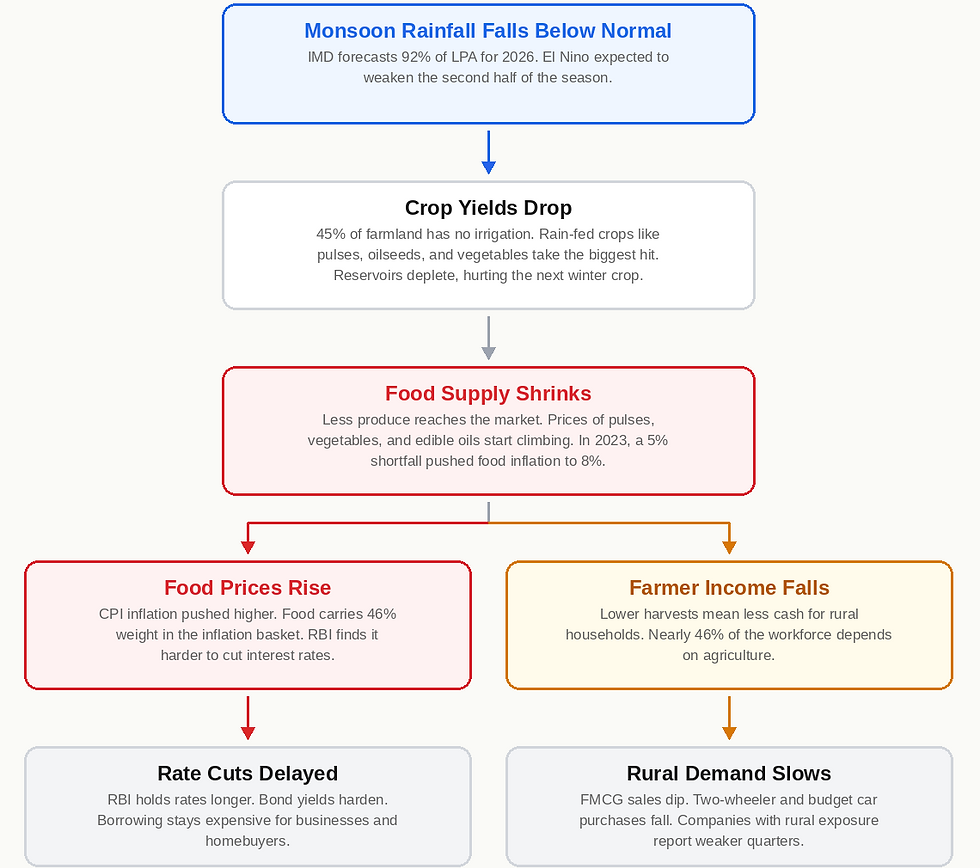
How Less Rain Hurts the Economy
What This Means for Inflation and Interest Rates
Right now, inflation looks comfortable. Headline CPI was 3.4% in March 2026. Food inflation was 3.87%. The RBI has projected average inflation of 4.6% for FY27. But the monsoon could very much change that.
Bloomberg Economics estimates that below-normal rains could push inflation to 5.8% this year. An ICICI Bank report found that in years with deficient rainfall, average food inflation runs at about 5.7%, compared to 4.4% in normal years. That gap may sound small, but it is enough to change the RBI's thinking on rate cuts.
Now let’s talk about how RBI reacts. If food prices rise because of a supply shortage, raising interest rates will not fix it. Higher rates slow demand but do not bring more rain or more food to market. But cutting rates to support growth is also risky, because it could let inflation expectations run loose. Governor Sanjay Malhotra has already signalled the bank will hold rates for longer. If you were hoping for rate cuts soon, this forecast has pushed the timeline out.
Who Gets Hurt, Who Benefits
A weak monsoon does not hit every sector the same way. Here is how it typically plays out:
Sectors likely to face pressure:
FMCG (rural): Companies selling small packs (Packets of shampoo, biscuits etc) in tier-3 and tier-4 towns depend on rural spending. When farmer incomes fall, sales volumes slow. Expect weaker numbers in the September and December quarters.
Two-wheelers and budget cars: Rural India drives a large share of motorcycle and entry-level car sales. A poor harvest directly dents demand.
Agro-processing: Sugar mills, edible oil refiners, and companies sourcing from rain-fed regions face input cost spikes and supply shortages.
Bonds and debt funds: If inflation crosses 5%, bond yields will likely harden. Duration bets on government securities get riskier.
Sectors that could see tailwinds:
Irrigation and water management: Government spending on micro-irrigation (drip, sprinkler systems) tends to speed up after deficit years. Companies in this space have historically outperformed the following year.
Agri-tech: Firms offering precision farming, weather advisory, and crop insurance get more traction during monsoon stress.
Select commodities: Domestic pulse and oilseed prices may firm up. But note: India imports 55-60% of its edible oil, so global prices matter as much as local rain.
The IMD will release an updated forecast in late May, with regional breakdowns and the expected monsoon onset date. That update will be more useful than the April number.
The smart response to this situation is not to panic, but to stay close to the data as it comes in and position accordingly. The monsoon will tell us more as it unfolds. The question is whether you are watching when it does.
Disclaimer: The views and opinions expressed in this article are solely those of the author and are based on personal analysis and interpretation of available information. They do not constitute financial, investment, or professional advice. Investments in financial markets are subject to market risks, including the possible loss of principal. Readers are strongly advised to conduct their own research and consult a qualified financial advisor or investment professional before making any investment decisions. The author and publisher shall not be held responsible for any financial losses or decisions taken based on the information provided in this article.
Want to read more?
Subscribe to finsightsbysquareleague.com to keep reading this exclusive post.